Video of Alan Dye’s Exit ⇥ youtube.com
I have obtained exclusive footage of Alan Dye leaving Apple Park after overseeing visual interface design updates across Apple’s operating systems.
Mark Gurman, Bloomberg:
Meta Platforms Inc. has poached Apple Inc.’s most prominent design executive in a major coup that underscores a push by the social networking giant into AI-equipped consumer devices.
The company is hiring Alan Dye, who has served as the head of Apple’s user interface design team since 2015, according to people with knowledge of the matter. Apple is replacing Dye with longtime designer Stephen Lemay, according to the people, who asked not to be identified because the personnel changes haven’t been announced.
Big week for changes in Apple leadership.
I am sure more will trickle out about this, but one thing notable to me is that Lemay has been a software designer for over 25 years at Apple. Dye, on the other hand, came from marketing and print design. I do not want to put too much weight on that — someone can be a sufficiently talented multidisciplinary designer — but I am curious to see what Lemay might do in a more senior role.
Admittedly I also have some (perhaps morbid) curiosity about what Dye will do at Meta.
One more note from Gurman’s report:
Dye had taken on a more significant role at Apple after Ive left, helping define how the company’s latest operating systems, apps and devices look and feel. The executive informed Apple this week that he’d decided to leave, though top management had already been bracing for his departure, the people said. Dye will join Meta as chief design officer on Dec. 31.
Let me get this straight: Dye personally launches an overhaul of Apple’s entire visual interface language, then leaves. Is that a good sign for its reception, either internally or externally?
Benj Edwards, Ars Technica:
Microsoft has lowered sales growth targets for its AI agent products after many salespeople missed their quotas in the fiscal year ending in June, according to a report Wednesday from The Information. The adjustment is reportedly unusual for Microsoft, and it comes after the company missed a number of ambitious sales goals for its AI offerings.
Based on Edwards’ summary — I still have no interest in paying for the Information — it sounds like this mostly affects sales of A.I. “agents”, a riskier technology proposition for businesses. This sounds to me like more concrete evidence of a plateau in corporate interest than the surveys reported on by the Economist.
As far as I can tell, Paul Haine was the first to notice something weird going on with HBO Max’ presentation. In one of season one’s most memorable moments, Roger Sterling barfs in front of clients after climbing many flights of stairs. As a surprise to Paul, you can clearly see the pretend puke hose (that is ultimately strapped to the back side of John Slattery’s face) in the background, along with two techs who are modulating the flow. Yeah, you’re not supposed to see that.
It appears as though this represents the original photography, unaltered before digital visual effects got involved. Somehow, this episode (along with many others) do not include all the digital visual effects that were in the original broadcasts and home video releases. It’s a bizarro mistake for Lionsgate and HBO Max to make and not discover until after the show was streaming to customers.
Eric Vilas-Boas, Vulture:
How did this happen? Apparently, this wasn’t actually HBO Max’s fault — the streamer received incorrect files from Lionsgate Television, a source familiar with the exchange tells Vulture. Lionsgate is now in the process of getting HBO Max the correct files, and the episodes will be updated as soon as possible.
It just feels clumsy and silly for Lionsgate to supply the wrong files in the first place, and for nobody at HBO to verify they are the correct work. An amateur mistake, frankly, for an ostensibly premium service costing U.S. $11–$23 per month. If I were king for a day, it would be illegal to sell or stream a remastered version of something — a show, an album, whatever — without the original being available alongside it.
Apple today announced John Giannandrea, Apple’s senior vice president for Machine Learning and AI Strategy, is stepping down from his position and will serve as an advisor to the company before retiring in the spring of 2026. Apple also announced that renowned AI researcher Amar Subramanya has joined Apple as vice president of AI, reporting to Craig Federighi. Subramanya will be leading critical areas, including Apple Foundation Models, ML research, and AI Safety and Evaluation. The balance of Giannandrea’s organization will shift to Sabih Khan and Eddy Cue to align closer with similar organizations.
When Apple hired Giannandrea from Google in 2018, the New York Times called it a “major coup”, given that Siri was “less effective than its counterparts at Google and Amazon”. The world changed a lot in the past six-and-a-half years, though: Siri is now also worse than a bunch of A.I. products. Of course, Giannandrea’s role at Apple was not limited to Siri. He spent time on the Project Titan autonomous car, which was cancelled early last year, before moving to generative A.I. projects. The first results of that effort were shown at WWDC last year; the most impressive features have yet to ship.
I feel embarrassed and dumb for hoping Giannandrea would help shake the company out of its bizarre Siri stupor. Alas, he is now on the Graceful Executive Exit Express, where he gets to spend a few more months at Apple in a kind of transitional capacity — you know the drill. Maybe Subramanya will help move the needle. Maybe this ex-Googler will make it so. Maybe I, Charlie Brown, will get to kick that football.
The Economist:
On November 20th American statisticians released the results of a survey. Buried in the data is a trend with implications for trillions of dollars of spending. Researchers at the Census Bureau ask firms if they have used artificial intelligence “in producing goods and services” in the past two weeks. Recently, we estimate, the employment-weighted share of Americans using AI at work has fallen by a percentage point, and now sits at 11% (see chart 1). Adoption has fallen sharply at the largest businesses, those employing over 250 people. Three years into the generative-AI wave, demand for the technology looks surprisingly flimsy.
[…]
Even unofficial surveys point to stagnating corporate adoption. Jon Hartley of Stanford University and colleagues found that in September 37% of Americans used generative AI at work, down from 46% in June. A tracker by Alex Bick of the Federal Reserve Bank of St Louis and colleagues revealed that, in August 2024, 12.1% of working-age adults used generative AI every day at work. A year later 12.6% did. Ramp, a fintech firm, finds that in early 2025 AI use soared at American firms to 40%, before levelling off. The growth in adoption really does seem to be slowing.
I am skeptical of the metrics used by the Economist to produce this summary, in part because they are all over the place, and also because they are mostly surveys. I am not sure people always know they are using a generative A.I. product, especially when those features are increasingly just part of the modern office software stack.
While the Economist has an unfortunate allergy to linking to its sources, I wanted to track them down because a fuller context is sometimes more revealing. I believe the U.S. Census data is the Business Trends and Outlook Survey though I am not certain because its charts are just plain, non-interactive images. In any case, it is the Economist’s own estimate of falling — not stalling — adoption by workers, not an estimate produced by the Census Bureau, which is curious given two of its other sources indicate more of a plateau instead of a decline.
The Hartley, et al. survey is available here and contains some fascinating results other than the specific figures highlighted by the Economist — in particular, that the construction industry has the fourth-highest adoption of generative A.I., that Gemini is shown in Figure 9 as more popular than ChatGPT even though the text on page 7 indicates the opposite, and that the word “Microsoft” does not appear once in the entire document. I have some admittedly uninformed and amateur questions about its validity. At any rate, this is the only source the Economist cites which indicates a decline.
The data point attributed to the tracker operated by the Federal Reserve Bank of St. Louis is curious. The Economist notes “in August 2024, 12.1% of working-age adults used generative A.I. every day at work. A year later 12.6% did”, but I am looking at the dashboard right now, and it says the share using generative A.I. daily at work is 13.8%, not 12.6%. In the same time period, the share of people using it “at least once last week” jumped from 36.1% to 46.9%. I have no idea where that 12.6% number came from.
Finally, Ramp’s data is easy enough to find. Again, I have to wonder about the Economist’s selective presentation. If you switch the chart from an overall view to a sector-based view, you can see adoption of paid subscriptions has more than doubled in many industries compared to October last year. This is true even in “accommodation and food services”, where I have to imagine use cases are few and far between.
After finding the actual source of the Economist’s data, it has left me skeptical of the premise of this article. However, plateauing interest — at least for now — makes sense to me on a gut level. There is a ceiling to work one can entrust to interns or entry-level employees, and that is approximately similar for many of today’s A.I. tools. There are also sector-level limits. Consider Ramp’s data showing high adoption in the tech and finance industries, with considerably less in sectors like healthcare and food services. (Curiously, Ramp says only 29% of the U.S. construction industry has a subscription to generative A.I. products, while Hartley, et al. says over 40% of the construction industry is using it.)
I commend any attempt to figure out how useful generative A.I. is in the real world. One of the problems with this industry right now is that its biggest purveyors are not public companies and, therefore, have fewer disclosure requirements. Like any company, they are incentivized to inflate their importance, but we have little understanding of how much they are exaggerating. If you want to hear some corporate gibberish, OpenAI interviewed executives at companies like Philips and Scania about their use of ChatGPT, but I do not know what I gleaned from either interview — something about experimentation and vague stuff about people being excited to use it, I suppose. It is not very compelling to me. I am not in the C-suite, though.
The biggest public A.I. firm is arguably Microsoft. It has rolled out Copilot to Windows and Office users around the world. Again, however, its press releases leave much to be desired. Levi Strauss employees, Microsoft says, “report the devices and operating system have led to significant improvements in speed, reliability and data handling, with features like the Copilot key helping reduce the time employees spend searching and free up more time for creating”. Sure. In another case study, Microsoft and Pantone brag about the integration of a colour palette generator that you can use with words instead of your eyes.
Microsoft has every incentive to pretend Copilot is a revolutionary technology. For people actually doing the work, however, its ever-nagging presence might be one of many nuisances getting in the way of the job that person actually knows how to do. A few months ago, the company replaced the familiar Office portal with a Copilot prompt box. It is still little more than a thing I need to bypass to get to my work.
All the stats and apparent enthusiasm about A.I. in the workplace are, as far as I can tell, a giant mess. A problem with this technology is that the ways in which it is revolutionary are often not very useful, its practical application in a work context is a mixed bag that depends on industry and role, and its hype encourages otherwise respectable organizations to suggest their proximity to its promised future.
The Economist being what it is, much of this article revolves around the insufficiently realized efficiency and productivity gains, and that is certainly something for business-minded people to think about. But there are more fundamental issues with generative A.I. to struggle with. It is a technology built on a shaky foundation. It shrinks the already-scant field of entry-level jobs. Its results are unpredictable and can validate harm. The list goes on, yet it is being loudly inserted into our SaaS-dominated world as a top-down mandate.
It turns out A.I. is not magic dust you can sprinkle on a workforce to double their productivity. CEOs might be thrilled by having all their email summarized, but the rest of us do not need that. We need things like better balance of work and real life, good benefits, and adequate compensation. Those are things a team leader cannot buy with a $25-per-month-per-seat ChatGPT business license.
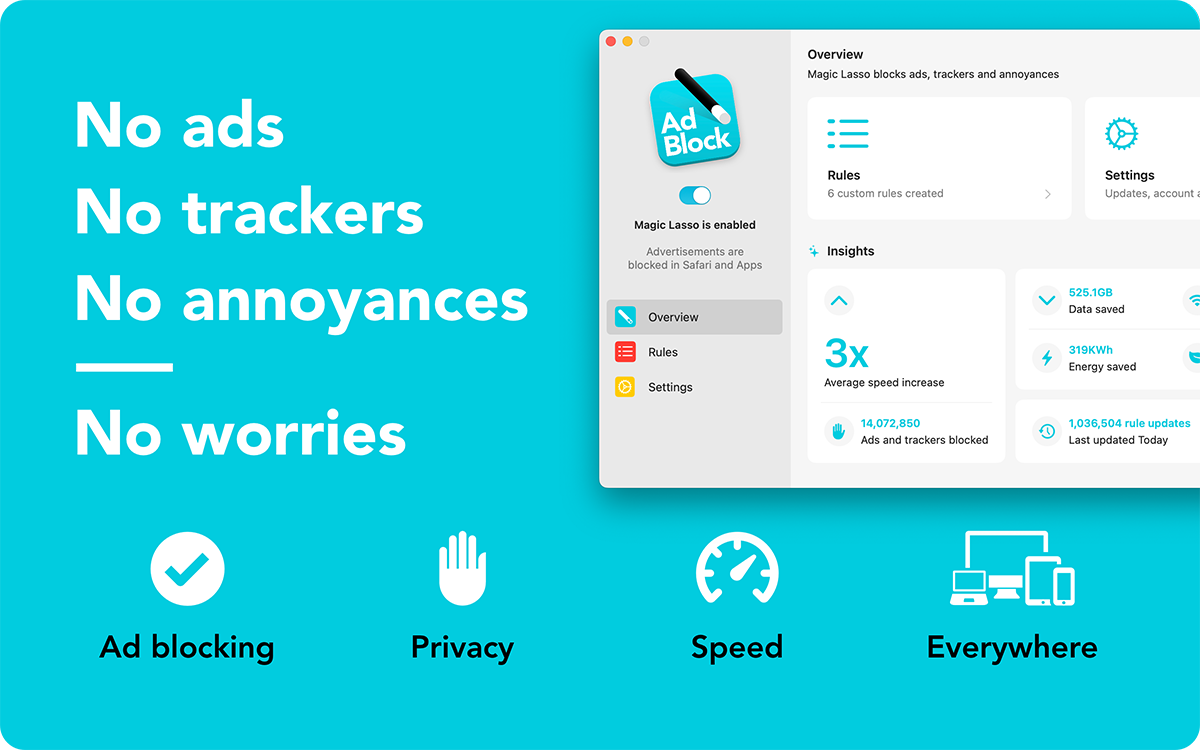
Maybe it’s because my eyes are getting old or maybe it’s because the contrast between windows on macOS keeps getting worse. Either way, I built a tiny Mac app last night that draws a border around the active window. I named it “Alan”.
A good, cheeky name. The results are not what I would call beautiful, but that is not the point, is it? It works well. I wish it did not feel understandable for there to be an app that draws a big border around the currently active window. That should be something made sufficiently obvious by the system.
Unfortunately, this is a problem plaguing the latest versions of MacOS and Windows alike, which is baffling to me. The bar for what constitutes acceptable user interface design seems to have fallen low enough that it is tripping everyone at the two major desktop operating system vendors.
Hank Green was not getting a lot of traction on a promotional post on Threads about a sale on his store. He got just over thirty likes, which does not sound awful, until you learn that was over the span of seven hours and across Green’s following of 806,000 accounts on Threads.
So he tried replying to rage bait with basically the same post, and that was far more successful. But, also, it has some pretty crappy implications:
That’s the signal that Threads is taking from this: Threads is like oh, there’s a discussion going on.
It’s 2025! Meta knows that “lots of discussion” is not a surrogate for “good things happening”!
I assume the home feed ranking systems are similar for Threads and Instagram — though they might not be — and I cannot tell you how many times my feed is packed with posts from many days to a week prior. So many businesses I frequent use it as a promotional tool for time-bound things I learn about only afterward. The same thing is true of Stories, since they are sorted based on how frequently you interact with an account.
Everyone is allowed one conspiracy theory, right? Mine is that a primary reason Meta is hostile to reverse-chronological feeds is because it requires businesses to buy advertising. I have no proof to support this, but it seems entirely plausible.